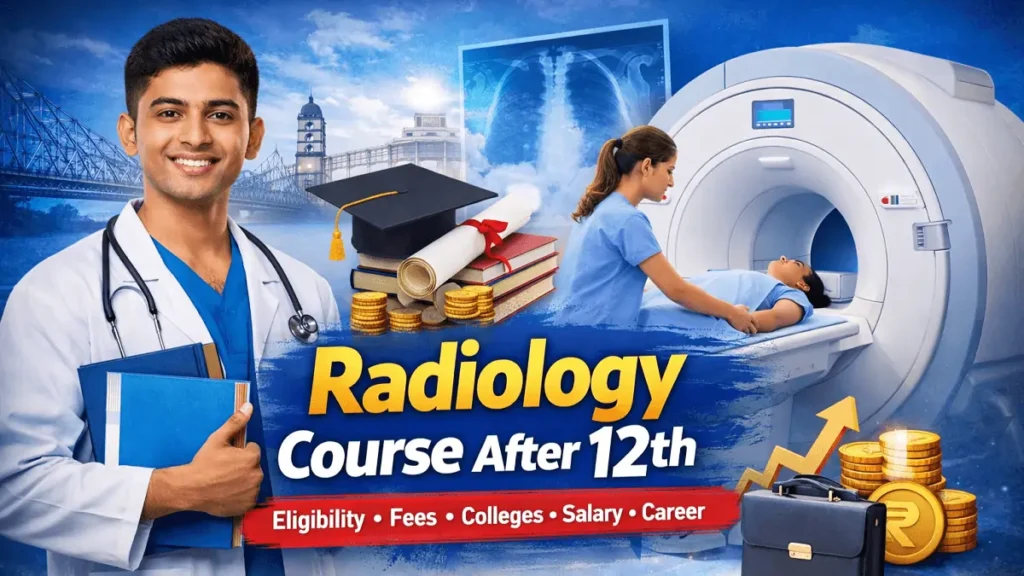
Radiology course is one of the fastest-growing fields in the healthcare industry. With the rapid development of medical technology and the expansion of hospitals and diagnostic centers, the demand for skilled radiology professionals has increased significantly in India. Many students who are interested in the medical field but do not want to become doctors choose a radiology course after 12th as a promising career option.
Radiology focuses on using advanced medical imaging technologies to diagnose diseases and injuries inside the human body. These technologies allow doctors to examine organs, tissues, and bones without performing surgery. Because of this, radiology plays a critical role in modern healthcare.
If you have completed your 12th with science and are interested in working with advanced medical equipment like X-ray, CT scan, MRI, ultrasound, and other imaging technologies, then pursuing a radiology course can open the door to a rewarding career in healthcare.
In this detailed guide, we will discuss everything you need to know about radiology courses after 12th, including eligibility, course duration, fees, top colleges in West Bengal, salary, career scope, and future opportunities in India.
Table of Contents
What is Radiology?
Radiology is a specialized branch of medical science that focuses on diagnosing and sometimes treating diseases using medical imaging techniques. Radiology professionals use advanced imaging equipment to create images of the internal structures of the body.
Doctors rely heavily on radiological images to detect diseases early and provide the correct treatment. Without radiology, diagnosing many medical conditions would be much more difficult.
Some of the most commonly used imaging technologies in radiology include:
- X-Ray
- CT Scan (Computed Tomography)
- MRI (Magnetic Resonance Imaging)
- Ultrasound
- PET Scan
- Mammography
- Fluoroscopy
Radiology professionals operate these machines and ensure that clear and accurate images are produced for doctors to analyze.
People working in this field are known by different titles, such as:
- Radiology Technician
- Radiographer
- Imaging Technologist
- MRI Technician
- CT Scan Technician
- Diagnostic Imaging Specialist
These professionals play a vital role in supporting doctors and healthcare providers.
Why Choose a Radiology Course After 12th?
Choosing a career in radiology offers several benefits. The healthcare industry is continuously growing, and diagnostic imaging has become an essential part of modern medical treatment.
Here are some reasons why students choose a radiology course after 12th.
High Demand in Healthcare
Hospitals and diagnostic centers require trained radiology technicians to operate imaging equipment. As healthcare facilities increase, the demand for radiology professionals also rises.
Good Salary Opportunities
Radiology professionals receive competitive salaries, especially with experience and specialization.
Short-Term Courses Available
Students can choose diploma courses that allow them to start working within 1–2 years.
Work with Advanced Technology
Radiology professionals work with modern medical machines such as MRI scanners and CT scan systems.
Career Opportunities Abroad
Radiology technicians are in demand globally, which creates opportunities for international careers.
Because of these advantages, radiology is considered one of the best paramedical courses after 12th science.
Types of Radiology Courses After 12th
Students can pursue different types of radiology courses depending on their career goals and educational background. These courses are generally divided into three categories:
- Certificate Courses
- Diploma Courses
- Degree Courses
Each type of course provides different levels of knowledge and training.
Certificate Radiology Courses
Certificate courses are short-term programs that introduce students to the basics of radiology and medical imaging technology.
These programs focus mainly on fundamental concepts and practical training.
Popular Certificate Courses
- Certificate in Radiology Technology
- Certificate in X-Ray Technology
- Certificate in Diagnostic Imaging
Course Duration
6 months to 1 year
Certificate programs are suitable for students who want to learn basic radiology skills quickly. However, most hospitals prefer candidates who have completed diploma or degree courses.
Diploma in Radiology Course
A Diploma in Radiology is a popular option for students who want to enter the healthcare sector quickly. These programs focus on practical training and equipment operation.
Students learn how to operate diagnostic imaging machines and assist doctors in medical imaging procedures.
Popular Diploma Radiology Courses
- Diploma in Radiology Technology
- Diploma in Radiography
- Diploma in X-Ray Technology
- Diploma in Medical Imaging Technology
Course Duration
1 to 2 years
Diploma programs provide both classroom learning and practical training in hospitals or diagnostic centers.
BSc Radiology Course Details
The BSc Radiology course is a full-time undergraduate degree program designed to provide in-depth knowledge of medical imaging and radiographic techniques.
This program includes both theoretical studies and hands-on training with imaging equipment.
Popular Degree Courses
- BSc Radiology
- BSc Radiology and Imaging Technology
- BSc Medical Imaging Technology
- BSc Radiography
Course Duration
3 to 4 years (including internship)
This program prepares students for advanced roles in diagnostic imaging and healthcare technology.
Radiology Courses After 12th Science
Students who complete their 12th with Physics, Chemistry, and Biology (PCB) or Physics, Chemistry, and Mathematics (PCM) can apply for radiology programs.
Some of the most popular radiology courses include:
| Course | Duration |
|---|---|
| Diploma in Radiology | 1–2 Years |
| Diploma in X-Ray Technology | 1–2 Years |
| BSc Radiology | 3 Years |
| BSc Radiology and Imaging Technology | 3–4 Years |
| BSc Medical Imaging Technology | 3–4 Years |
Among these programs, BSc Radiology and Imaging Technology is considered one of the most comprehensive options.
Eligibility for Radiology Course After 12th
Eligibility requirements may vary slightly depending on the college or university. However, the general eligibility criteria are as follows.
Basic Eligibility
Students must complete 12th standard with science stream.
Required subjects typically include:
- Physics
- Chemistry
- Biology or Mathematics
Minimum Marks
Most colleges require at least 45% to 60% marks in 12th grade.
Additional Requirements
Some universities may also conduct:
- Entrance examinations
- Personal interviews
- Merit-based admission processes
Students should check the specific requirements of the institution they wish to apply to.
Radiology Course Duration
The duration of radiology programs depends on the type of course selected.
| Course Type | Duration |
|---|---|
| Certificate Course | 6 months – 1 year |
| Diploma Course | 1 – 2 years |
| BSc Radiology | 3 years |
| BSc Radiology & Imaging Technology | 3 – 4 years |
| MSc Radiology | 2 years |
Degree courses usually include internships or clinical training in hospitals.
Radiology Course Fees in India
The fees for radiology courses vary depending on the institution and the type of program.
Diploma Course Fees
30,000 to 1,50,000 for the entire course.
BSc Radiology Fees
1,50,000 to 5,00,000 total course fees.
MSc Radiology Fees
1,00,000 to 3,00,000.
Government colleges generally charge lower fees, while private institutions may charge higher fees due to better facilities.
Radiology Course Fees in West Bengal
West Bengal offers several institutions that provide radiology and medical imaging programs.
Average fee ranges in West Bengal include:
| Course | Average Fees |
|---|---|
| Diploma Radiology | 40,000 – 1,20,000 |
| BSc Radiology | 2,00,000 – 4,50,000 |
Some colleges offer scholarships and financial assistance to eligible students.
Top Radiology Colleges in West Bengal
West Bengal has many institutions offering radiology and allied health science programs.
NSHM Knowledge Campus
NSHM Knowledge Campus is one of the well-known institutions offering healthcare education.
Courses include:
- BSc Radiology and Imaging Technology
The institution focuses on practical training and industry exposure.
Swami Vivekananda University
Swami Vivekananda University offers several allied health science programs.
Courses include:
- BSc Radiology
- Medical Imaging Technology
The university provides modern laboratories and clinical training.
JIS University
JIS University offers paramedical and healthcare programs including radiology.
The university focuses on research and practical learning.
Brainware University
Brainware University provides advanced healthcare programs with laboratory facilities and hospital training.
Radiology Course Syllabus
Radiology programs include a combination of theoretical subjects and practical training.
First Year Subjects
- Human Anatomy
- Human Physiology
- Medical Terminology
- Basic Radiographic Techniques
Second Year Subjects
- Radiation Physics
- Radiographic Imaging Techniques
- Pathology
- CT Scan Technology
Third Year Subjects
- MRI Technology
- Ultrasound Imaging
- Radiation Protection
- Clinical Internship
Students gain hands-on experience with imaging machines during hospital training.
Radiology Jobs After Course Completion
Graduates of radiology courses can work in various healthcare sectors.
Popular Job Roles
- Radiology Technician
- Radiographer
- MRI Technician
- CT Scan Technician
- Imaging Technologist
- Diagnostic Technician
These professionals assist doctors in performing diagnostic imaging procedures.
Radiology Career Scope in India
The career scope of radiology is expanding rapidly due to the growth of the healthcare sector.
India is witnessing an increase in:
- Hospitals
- Diagnostic centers
- Medical research institutions
Because of this growth, the demand for skilled radiology professionals continues to rise.
Radiology professionals can work in:
- Government hospitals
- Private hospitals
- Diagnostic laboratories
- Imaging centers
- Research institutions
- Medical equipment companies
Experienced professionals may also work abroad in countries where radiology technicians are highly paid.
Radiology Salary in India
Radiology professionals receive attractive salary packages depending on experience and specialization.
Entry-Level Salary
15,000 to 30,000 per month.
Mid-Level Salary
35,000 to 60,000 per month.
Experienced Professionals
70,000 to 1,20,000 or more per month.
Professionals working in large hospitals or corporate diagnostic centers can earn even higher salaries.
Skills Required for Radiology Professionals
To succeed in the radiology field, students should develop certain skills.
Important skills include:
- Attention to detail
- Technical knowledge of imaging machines
- Analytical thinking
- Communication skills
- Patient care abilities
- Understanding of medical terminology
These skills help radiology professionals perform their duties effectively.
Future Scope of Radiology
The future of radiology is very promising because of continuous advancements in medical technology.
New technologies are transforming the field of diagnostic imaging.
Some emerging technologies include:
- Artificial Intelligence in radiology
- Digital medical imaging
- 3D imaging technology
- Advanced MRI and CT systems
These innovations will create more job opportunities for trained radiology professionals.
Radiology vs Other Paramedical Courses
Students often compare radiology with other paramedical programs.
| Course | Focus Area |
|---|---|
| Radiology | Medical imaging |
| BMLT | Laboratory testing |
| OT Technician | Operation theatre management |
| Dialysis Technology | Kidney dialysis treatment |
Radiology stands out because it involves working with advanced diagnostic technology.
Frequently Asked Questions (FAQs)
Is radiology a good career after 12th?
Yes, radiology is a highly promising career because of its strong demand in the healthcare sector.
Which radiology course is best?
BSc Radiology and Imaging Technology is considered one of the best courses in this field.
What is the salary of a radiology technician in India?
Entry-level radiology technicians earn around 15,000 to 30,000 per month, while experienced professionals can earn more than 70,000 per month.
Can I do a radiology course after 12th arts?
Most radiology courses require science subjects such as Physics, Chemistry, and Biology or Mathematics.
How many years is a radiology course?
Diploma courses take 1–2 years, while BSc radiology programs take around 3–4 years.
Conclusion
Radiology has become one of the most important fields in modern healthcare. With the increasing use of medical imaging technologies, trained radiology professionals are needed in hospitals and diagnostic centers across India.
Students who are interested in medical technology and healthcare can pursue radiology courses after 12th science to build a rewarding career. These courses provide the skills required to operate advanced imaging machines and assist doctors in diagnosing diseases.
Whether you choose a diploma or a BSc radiology course, this field offers strong career opportunities, good salary growth, and job stability.
As healthcare infrastructure continues to expand, radiology professionals will remain an essential part of the medical industry. For students looking for a career in the healthcare sector without becoming a doctor, pursuing a radiology course can be an excellent choice.