The maritime industry is one of the most important sectors in global trade. More than 90% of international goods are transported through ships, which creates a huge demand for skilled professionals in the shipping industry.
Two of the most popular courses for students who want to build a career in the Merchant Navy are Marine Engineering and Nautical Science. Both fields offer exciting opportunities to travel across the world, work on large ships, and earn attractive salaries.
However, many students are confused about the difference between these two courses. While both are related to ships and maritime operations, their roles and responsibilities are completely different.
This article explains everything you need to know about Marine Engineering and Nautical Science, including course details, eligibility, career opportunities, salary, and the major differences between them.
Table of Contents
What is Marine Engineering?
Marine Engineering is a specialized branch of engineering that focuses on the design, operation, maintenance, and repair of ship machinery and technical systems.
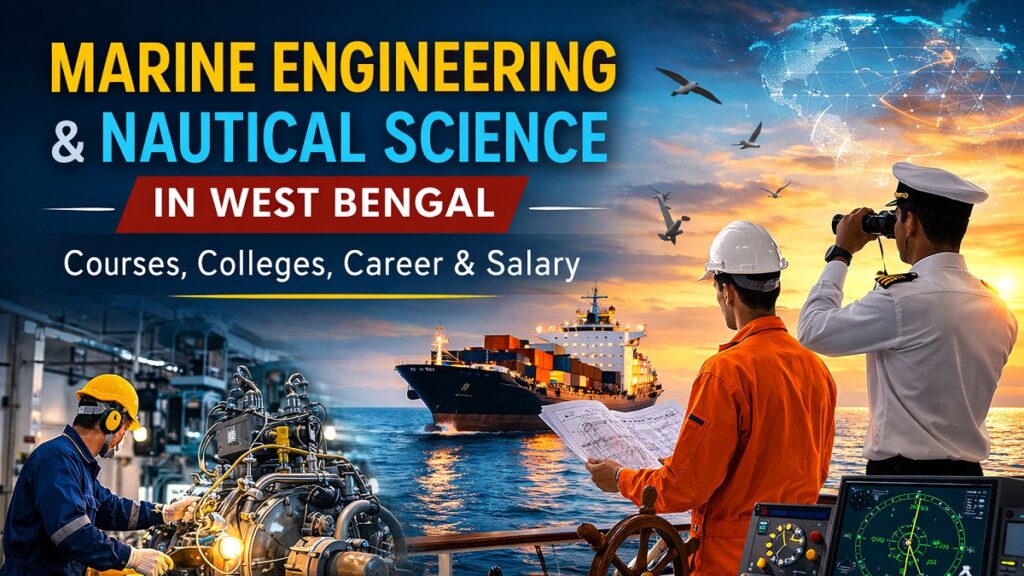
Marine engineers are responsible for ensuring that all mechanical and electrical systems inside a ship work properly. They mainly work in the engine room, managing complex machines such as engines, turbines, generators, and fuel systems.
Without marine engineers, ships cannot operate safely or efficiently.
Major Responsibilities of Marine Engineers
Marine engineers perform several technical tasks on board ships, including:
- Maintaining ship engines and propulsion systems
- Operating generators and electrical systems
- Repairing machinery and mechanical equipment
- Monitoring fuel and power systems
- Ensuring the safe functioning of all engineering operations
They play a crucial role in keeping ships operational during long international voyages.
What is Nautical Science?
Nautical Science is the study of ship navigation, maritime operations, and ship management. It prepares students to become navigation officers and ship captains.
Unlike marine engineers who work with machines, nautical science professionals focus on sailing the ship safely across oceans.
They work on the bridge of the ship, where navigation systems and communication equipment are located.
Major Responsibilities of Nautical Officers
Students who study nautical science eventually become navigation officers with responsibilities such as:
- Navigating ships across oceans
- Planning sea routes and voyages
- Monitoring weather and sea conditions
- Managing cargo operations
- Communicating with ports and maritime authorities
- Ensuring the safety of crew and passengers
With experience, they can become Chief Officers and Ship Captains.
Marine Engineering vs Nautical Science
Many students struggle to choose between these two maritime courses. The following table clearly explains the differences between them.
| Feature | Marine Engineering | Nautical Science |
|---|---|---|
| Field Type | Engineering & Technical | Navigation & Ship Operations |
| Work Area | Engine Room | Bridge (Navigation Area) |
| Main Focus | Machinery, Engines, Technical Systems | Navigation, Ship Control |
| Career Growth | Chief Engineer | Captain (Master of Ship) |
| Nature of Work | Mechanical and Technical | Leadership and Navigation |
| Skills Required | Technical knowledge, mechanical skills | Navigation skills, decision-making |
Both careers are equally respected and offer high salaries in the maritime industry.
Marine Engineering and Nautical Science Courses in West Bengal
Students in West Bengal can pursue different maritime programs depending on their interests and qualifications.
Marine Engineering Courses
| Course | Duration | Level |
|---|---|---|
| B.Tech Marine Engineering | 4 Years | Undergraduate |
| Diploma in Marine Engineering | 3 Years | Diploma |
| M.Tech Marine Engineering | 2 Years | Postgraduate |
Nautical Science Courses
| Course | Duration | Level |
|---|---|---|
| B.Sc Nautical Science | 3 Years | Undergraduate |
| Diploma in Nautical Science (DNS) | 1 Year + Sea Training | Diploma |
| M.Sc Nautical Science | 2 Years | Postgraduate |
These courses combine classroom learning with practical maritime training.
Top Marine Engineering and Nautical Science Colleges in West Bengal
West Bengal is home to some reputed maritime training institutes in India.
| College | Location | Popular Course |
|---|---|---|
| Marine Engineering & Research Institute (MERI) | Kolkata | Marine Engineering |
| Indian Maritime University Kolkata Campus | Kolkata | Marine Engineering |
| International Maritime Institute (IMI) | Kolkata Region | Nautical Science |
| Academy of Maritime Education & Training (partner institutes) | Various | Maritime Courses |
These institutes provide modern training facilities, simulators, and practical maritime education.
Eligibility Criteria for Maritime Courses
Students must meet certain academic and medical requirements to join marine engineering or nautical science programs.
| Criteria | Requirement |
|---|---|
| Educational Qualification | 10+2 with Physics, Chemistry, Mathematics |
| Minimum Marks | Usually 50–60% |
| Age Limit | Generally 17 – 25 years |
| Medical Fitness | Must meet maritime medical standards |
| Eyesight | Good vision required |
Candidates must also pass medical examinations as per maritime authority rules.
Admission Process in West Bengal Maritime Colleges
Admission to maritime programs usually involves the following steps:
- Entrance Examination – Some institutes accept maritime entrance tests.
- Application to Maritime Colleges – Students apply to approved institutes.
- Medical Fitness Test – Candidates must pass strict health examinations.
- Counselling and Seat Allotment – Admission is offered based on merit.
Many institutes also require English proficiency and physical fitness.
Career Opportunities After Marine Engineering
Marine engineering graduates have several career options in the maritime and shipping industries.
Job Roles
- Marine Engineer
- Ship Maintenance Engineer
- Technical Superintendent
- Offshore Engineer
- Chief Engineer
Industries
- International Shipping Companies
- Offshore Oil and Gas Industry
- Shipbuilding Industry
- Marine Equipment Manufacturing
Career Opportunities After Nautical Science
Students who complete nautical science programs typically work in the navigation department of ships.
Job Roles
- Deck Cadet
- Third Officer
- Second Officer
- Chief Officer
- Captain (Master Mariner)
These professionals are responsible for navigation and overall ship management.
Salary in Marine Engineering and Nautical Science
The maritime industry offers attractive salaries due to the challenging nature of the work and international exposure.
| Experience Level | Marine Engineering Salary | Nautical Science Salary |
|---|---|---|
| Entry Level | 6 LPA – 12 LPA | 4 LPA – 10 LPA |
| Mid Level | 12 LPA – 25 LPA | 10 LPA – 20 LPA |
| Senior Level | 30 LPA+ | 30 LPA+ |
Senior professionals, such as Chief Engineers and Ship Captains, can earn very high salaries in international shipping companies.
Skills Required for Maritime Careers
Students who want to succeed in maritime careers should develop the following skills:
- Strong physical fitness
- Technical and mechanical knowledge
- Leadership and decision-making ability
- Ability to work under pressure
- Communication and teamwork skills
Life on ships requires discipline, adaptability, and responsibility.
Conclusion
Marine Engineering and Nautical Science are excellent career options for students who want to work in the maritime and shipping industry. These courses provide opportunities to travel internationally, gain valuable technical experience, and earn attractive salaries.
For students in West Bengal, several reputed institutes offer quality maritime education and training. By choosing the right course and gaining the necessary skills, students can build a successful career in the Merchant Navy and global shipping industry.